Innovative Therapies
Molecular Biotechnology and Protein Engineering
Host-pathogen Interactions
Rickettsia
Proteolysis
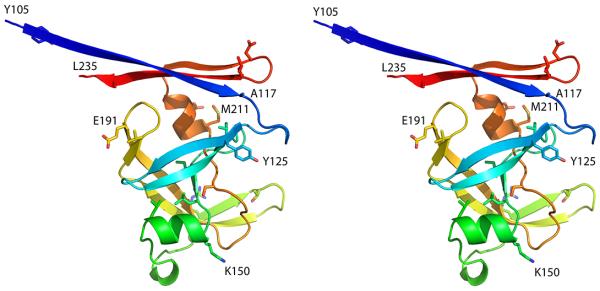
Aspartic Proteases
Biotechnology
Recombinant Protein Production
Research lines
Understand the role of proteolysis in the context of infection, using spotted fever group rickettsiae as our working model, to identify proteases/proteolytic machineries as novel biological targets
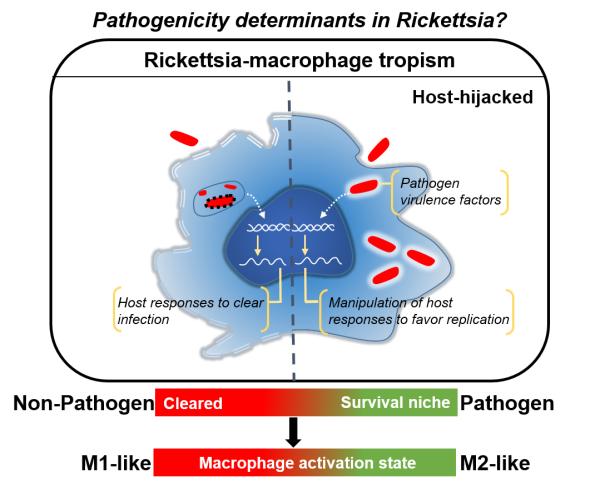
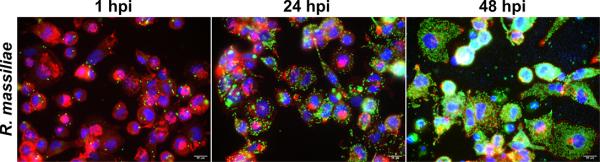
Understand the role of macrophage permissiveness in rickettsial pathogenesis and decipher how mildly pathogenic SFG Rickettsia target and manipulate host cell metabolic and proteostatic responses
Decipher the role of cell-to-cell communication for the development of rickettsial infections
Develop new biotech applications based on proteases and proteases’ engineering"
Overview
The activities of the Microbial and Molecular Biotechnology Group are focused on performing high-quality research and advanced training to obtain a better understanding of the mechanisms of disease and pathogenicity in obligate intracellular pathogens, as is the case of many Rickettsia spp. With our work, we expect to contribute to the identification of new factors and/or molecular pathways that may constitute pathogen- or host-directed targets for therapeutic intervention or the development of new diagnostics.
Our research is grounded on interdisciplinary collaborations with an international orientation. We have made significant contributions both in fundamental aspects of structure-function relationships of aspartic proteases as well as in exploring their biotechnological potential. Also, we have been contributing to establish macrophage colonization as a new virulence trait in Rickettsia. Therefore, allying our expertise in the proteolysis field with our experience with SFG Rickettsia, our current research program aims at exploring two understudied aspects of rickettsial biology:
- How proteolytic pathways modulate Rickettsia-host cell interactions;
- How mildly pathogenic Rickettsia hijack host cell function;
Our research programs combine methodologies from cell biology, molecular biology, recombinant DNA technology, heterologous protein production, protein chemistry, enzymology, complemented with various system-wide quantitative proteomics approaches. We are a BSL-2 lab, with state of the art equipment for: Cell culture and handling of pathogenic organisms (biological safety cabinets, centrifuge safety containers); Protein expression (incubators up to 12L, high capacity centrifuges; High-Pressure homogenizer); Protein Purification (low and medium pressure chromatography, Tangential Filtration systems); Protein Characterization (HPLC, Fluorimeter, Spectrophotometer); and Plant growth (FitoClima PLH 12000 ‘walk-in’);





Publications
Information about journal articles, updated at 23-11-2026, from platform CIÊNCIAVITAE.
5 out of 85 Publications
Past R&D Projects