Neuroscience and Disease
Gut-Brain Axis
Mitochondria
Microbiome
Innate Immunity
Neurodegenerative Disorders
Neuropsychiatric Disorders

Research lines
The Gut-Brain axis in the etiology of neurodegenerative and neuropsychiatric diseases
Mitochondrial signaling of neuronal innate immunity
The impact of gut immunity in the brain
ASYN as a bacteriostatic protein
miRNAs and ccf-mtDNA as new mediators of the gut-brain axis
Overview
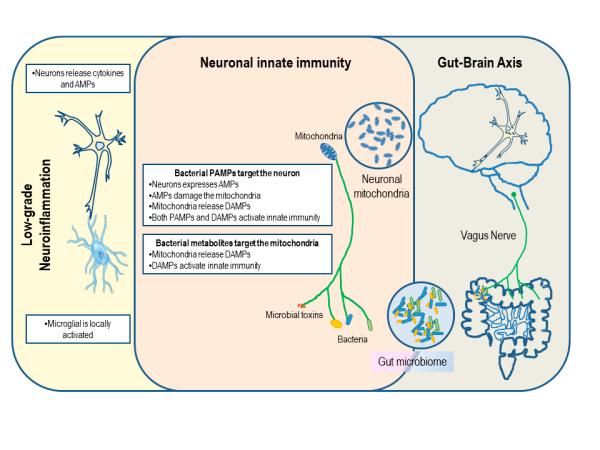
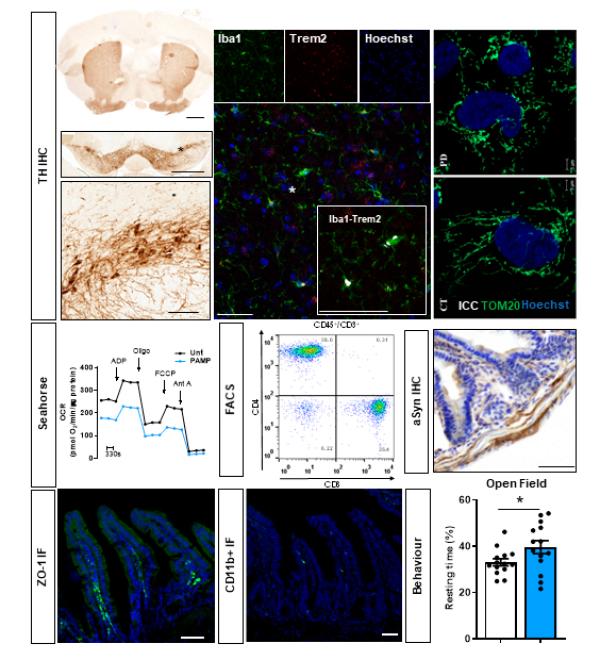
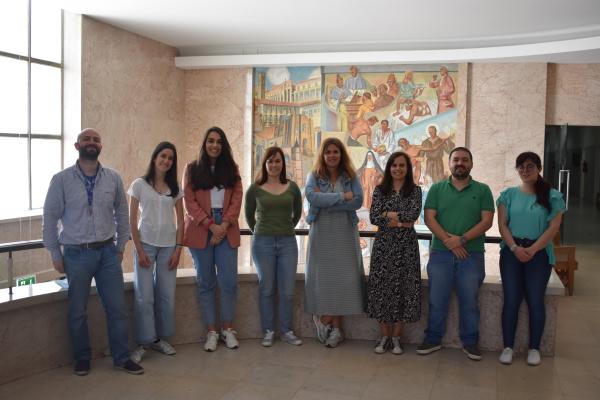
We live in a world where several environmental factors that favor the development of chronic neurodegenerative and neuropsychiatric disorders are accruing. A cutting-edge area of research involves the gut-brain axis (GAin), in which the bidirectional communication between the enteric and central nervous systems via the vagus nerve also extends to endocrine, humoral, metabolic and immune pathways. Recent research indicates that a key regulator of this axis is the gut microbiota, in particular its composition and metabolites. The main objectives of the GAin group are: a) to validate a new paradigm for the etiology of neurodegenerative and neuropsychiatric diseases at the interface gut-brain; b) to study how dysfunctional mitochondria leads to deregulated immune responses and what is the impact on the central nervous system, taking into account their microbial origin and the echoes of eventual confrontations between their evolutionary ancestors, the mitochondria; c) to explore how gut immune cells change after microbiome transplants and bacterial infections in mice, and their impact on brain function and development; d) to elucidate the role of proteins such as ASYN that are hallmarks of neurodegenerative disorders and e) to understand how microRNAs (miRNAs) and circulating cell-free mitochondrial DNA (ccf-mtDNA) regulate gene expression, serving as signaling molecules along the gut-brain axis and as potential biomarkers for early detection and progression monitoring of gut-brain axis dysfunction in both neurodegenerative and gut inflammatory diseases. To achieve our goals, models such as cell lines, mice and human tissue, as well as different techniques (flow cytometry, IHC/ICC, Seahorse, behavior and others) are used to understand and characterize the cellular and molecular mechanisms that underlie brain changes and to provide scientific bases for future studies in humans. Our group integrates researchers with complementary backgrounds, such as neurobiologists, biochemists, pharmacists and neurologists, allowing a more in-depth integrated perspective of the scientific questions. We are also committed to the education of young highly motivated students, mostly at the PhD level.
Team
















Featured Publications
Information about journal articles, updated at 23-11-2026, from platform CIÊNCIAVITAE.
5 out of 6 Featured Publications
Publications
Information about journal articles, updated at 23-11-2026, from platform CIÊNCIAVITAE.
5 out of 250 Publications
Past R&D Projects